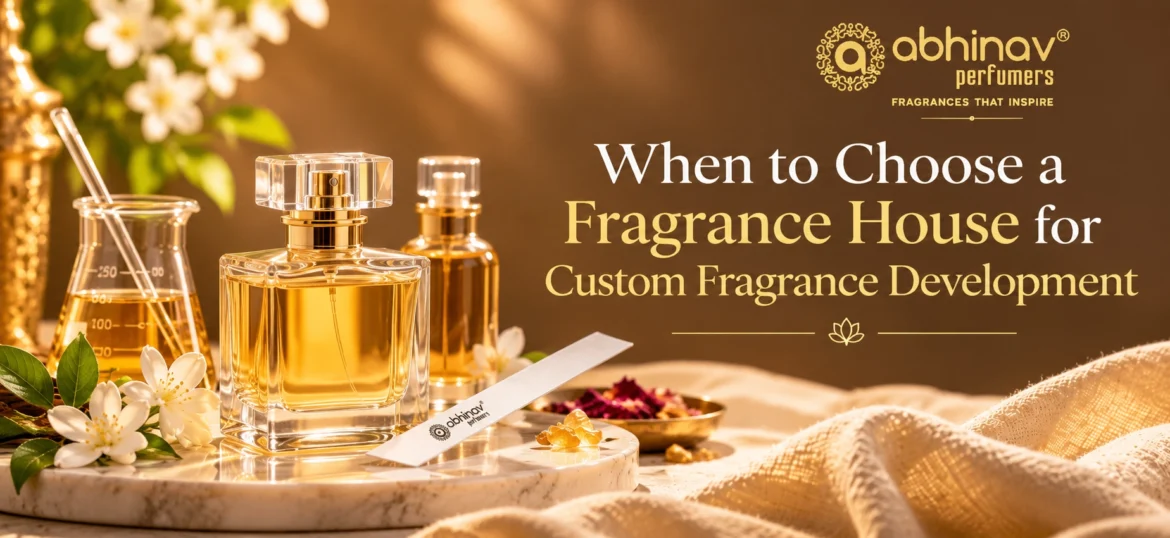
A ready-made fragrance can smell appealing, fit your budget and be available for immediate purchase. So when does working with a fragrance house become a better business decision? The answer goes beyond scent preference. A catalogue fragrance may suit a product launch perfectly, but fall short when a brand needs distinctive scent identity, specific in-product […]
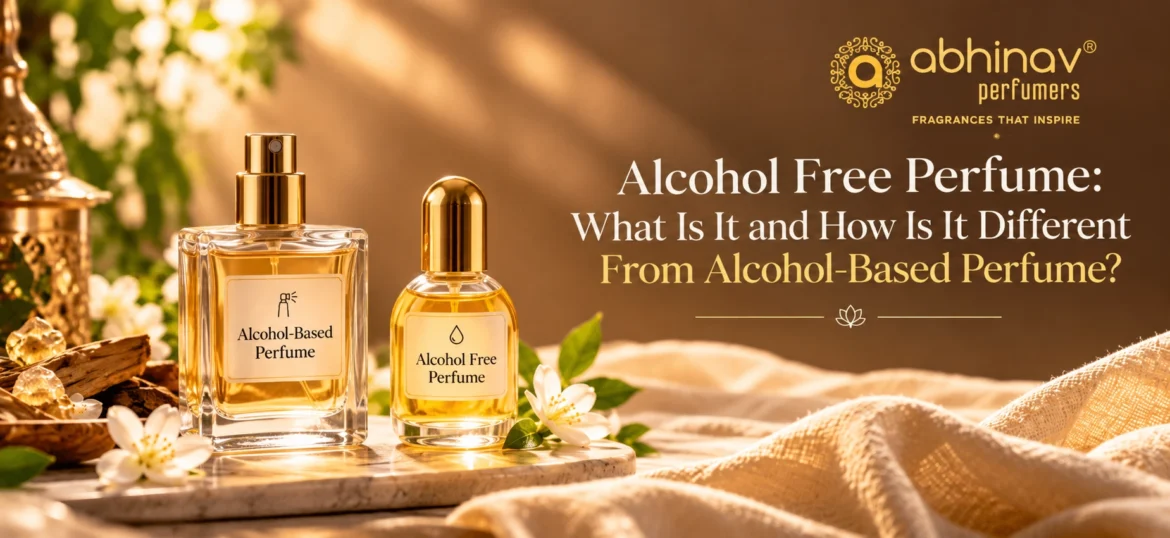
Alcohol Free Perfume: What Is It and How Is It Different From Alcohol-Based Perfume?
An alcohol free perfume and an alcohol-based perfume can share similar aromatic ingredients yet smell noticeably different on the skin. One may deliver an immediate burst of fragrance, while the other releases its scent more gradually. The difference lies largely in the carrier. Alcohol doesn’t define a perfume’s scent identity, but it influences how that […]
How to Choose Agarbatti Fragrance for Dipped Sticks, Masala Batti and Dhoop
An agarbatti fragrance that delivers a rich sandalwood aroma on a dipped incense stick may smell subdued or entirely different in masala batti or dhoop. Choosing the right perfume goes beyond selecting popular scents like jasmine, rose or sandalwood. For incense manufacturers, three questions matter: Which base will carry the fragrance? How will the perfume […]
How a Fragrance House Develops Scents for Different Product Categories
A floral fragrance may smell exceptional in a perfume, barely register in shampoo lather, fade after a laundry rinse, or take on a different character when burned in agarbatti. For a fragrance house, these differences aren’t minor adjustments. They determine how the formula must be built. A fragrance concentrate is only the starting point. Its […]
From Fragrance Brief to Finished Batch: How Industrial Fragrance Development Works
A fragrance may smell compelling on a blotter yet fade, distort, or cause cloudiness once introduced into a shampoo or detergent. That difference shapes industrial fragrance development. A fragrance manufacturer must translate the client’s brief into a scent that performs in its actual product base – not simply create an appealing aroma. At Abhinav Perfumers, […]
How Agarbatti Fragrance Changes During Burning?
An agarbatti fragrance begins telling its story long before the stick is lit. A jasmine-scented stick, for instance, may smell beautifully floral straight from the packet, yet reveal a warmer, softer, or distinctly smokier character once the ember starts moving. The perfume hasn’t simply changed in intensity; the way its aromatic compounds reach our senses […]
How Is Alcohol Free Perfume Made?
Perfume does not always need alcohol to deliver a pleasant and lasting scent. An alcohol free perfume uses a different formulation approach, replacing traditional alcohol-based carriers with suitable alternatives that can help dissolve and distribute fragrance ingredients. This makes non alcoholic perfume an option for people who specifically want perfume without alcohol or are exploring […]
What Makes a Laundry Fragrance Smell Clean Without Smelling Harsh?
A laundry product can clean effectively, but its fragrance often shapes how people judge the overall experience. A scent that feels fresh, balanced, and familiar can make freshly washed clothes seem cleaner, while an overly sharp or chemical note may feel harsh. This is where fabric care fragrance plays an important role in laundry products. […]
Fragrance Manufacturer vs Fragrance Supplier: What Is the Difference?
When sourcing fragrance for an FMCG product, the terms fragrance manufacturer and fragrance supplier can sound interchangeable, but they may describe different roles in the development and supply process. Understanding that difference matters when you are comparing fragrance manufacturers in India, discussing a new product, or planning regular bulk purchases. A manufacturer may be involved […]
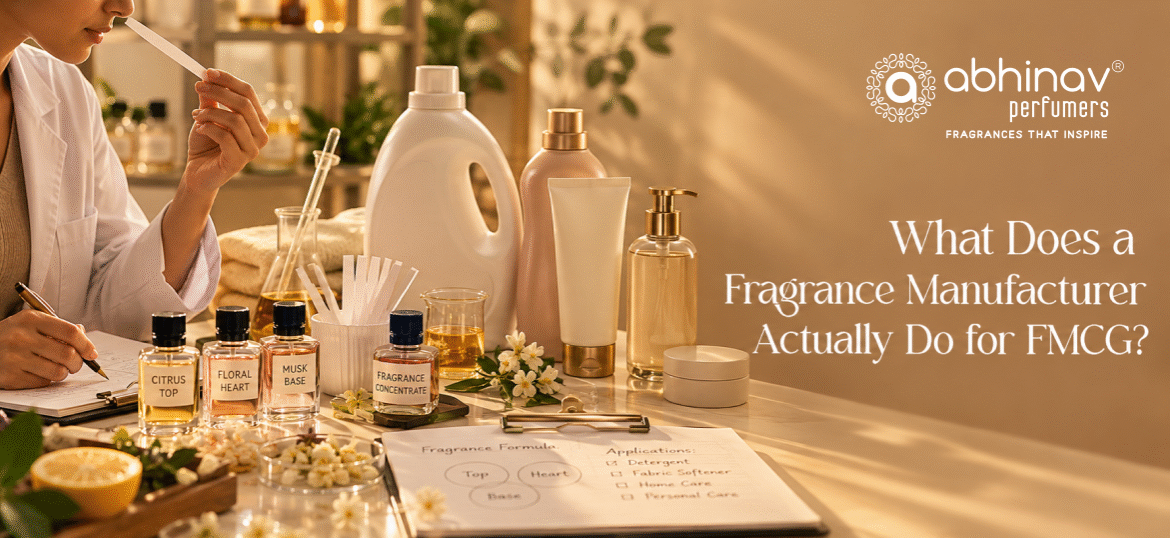
What Does a Fragrance Manufacturer Actually Do for an FMCG Brand?
A fragrance manufacturer does more than supply a finished scent. For an FMCG brand, the process can involve understanding the product, developing a suitable fragrance direction, creating samples, refining them through feedback, and supporting testing before production. This matters because the fragrance has to work within the product itself, not just smell appealing on a […]