

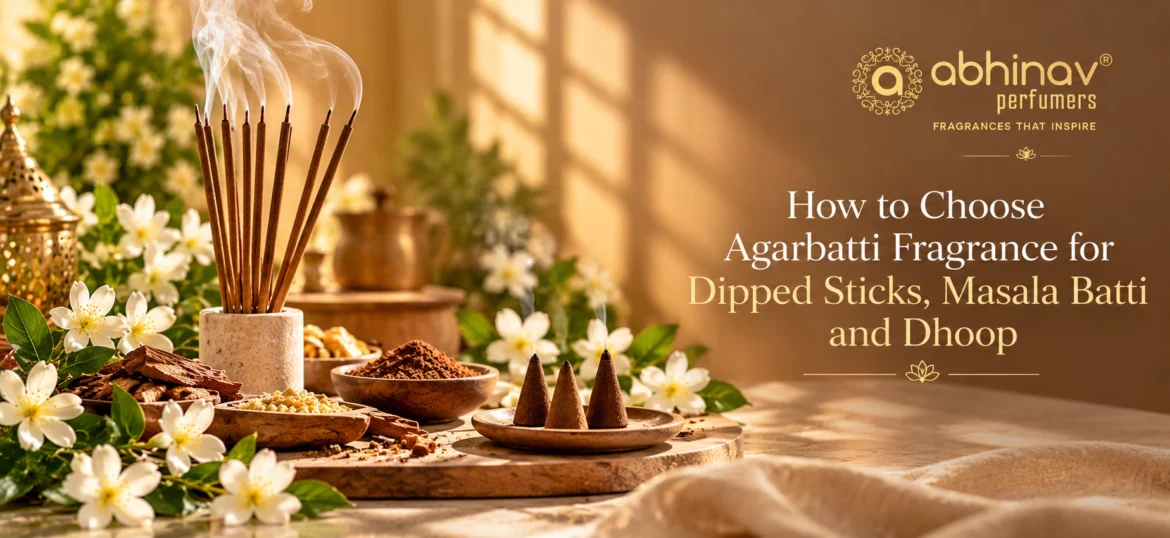
An agarbatti fragrance that delivers a rich sandalwood aroma on a dipped incense stick may smell subdued or entirely different in masala batti or dhoop. Choosing the right perfume goes beyond selecting popular scents like jasmine, rose or sandalwood.
For incense manufacturers, three questions matter: Which base will carry the fragrance? How will the perfume be incorporated? What aroma should customers experience when burning the finished product? These decisions determine which fragrance formulation suits each incense format.
Why Must Agarbatti Fragrance Be Selected According to the Incense Format?
The same agarbatti fragrance can produce noticeably different aromas in dipped sticks, masala batti, dhoop sticks and incense cones. That’s because the perfume must work with the incense base, not independently of it.
Three factors determine its suitability:
- Base composition: Charcoal, wood powders, resins and binders differ in absorbency and natural odour, influencing fragrance uptake and the final scent.
- Fragrance application: Dipped sticks absorb perfume through a prepared blank, while masala batti and many dhoop formulations incorporate fragrance directly into the mixture.
- Finished-product performance: The intended aroma must remain acceptable through processing, packaging and storage, and recognisable during burning.
For example, a jasmine agarbatti perfume may smell distinct on a relatively neutral blank but lose definition against an aromatic masala base.
This makes format-specific fragrance selection essential before production trials.
Which Agarbatti Fragrance Works Best for Each Incense Format?
Before selecting an agarbatti fragrance, manufacturers must identify the base material, perfuming method and intended burning conditions. A fragrance’s suitability depends on more than its scent profile.
| Incense Format | Selection Concern | Evaluate |
| Dipped agarbatti | Blank-stick absorbency | Uniform uptake and scent |
| Flora/masala agarbatti | Aromatic base ingredients | Balance with masala composition |
| Dry dhoop sticks | Base and production method | Retention and burning aroma |
| Wet dhoop sticks | Moist mixture compatibility | Incorporation and processing stability |
| Dhoop cones | Compact cone structure | Scent character and burn consistency |
| Bakhoor | Substrate and heating method | Aroma under intended heating |
Dipped Agarbatti: Does the Perfume Suit the Blank?
Charcoal and wood-powder blanks absorb fragrance differently. Test the incense stick fragrance on production blanks to confirm consistent uptake and aroma after conditioning.
Masala Agarbatti: Does It Complement the Base?
Resins, botanicals and other aromatic ingredients contribute their own scent. A masala agarbatti fragrance must complement these materials without losing its intended identity.
Dry and Wet Dhoop: Is It Compatible With Processing?
Formulations vary between manufacturers. Assess how dhoop fragrance distributes through each mixture, withstands processing and performs in the finished product.
Dhoop Cones and Bakhoor: Does Heating Change Performance?
Cone density influences burning behaviour, while bakhoor may release fragrance through indirect heating. Both require testing under their intended use conditions. A successful dipped-stick perfume should never receive automatic approval for another incense format.
How Do the Incense Base and Perfuming Method Affect Fragrance Selection?
An agarbatti fragrance must be compatible with both the raw incense materials and the method used to introduce it. Even a well-balanced perfume can deliver inconsistent results when these factors change.
Why Does the Raw Incense Base Matter?
Charcoal-based blanks and wood-powder formulations differ in porosity and fragrance absorption. Resins, binders and naturally aromatic ingredients can also influence the final scent.
For example, a rose agarbatti perfume may retain a distinct floral character on an absorbent charcoal-based stick but smell noticeably different in a strongly aromatic masala base.
Should Fragrance Be Applied After Forming or Incorporated Into the Mixture?
The application method determines different formulation priorities:
- Dipped sticks: The perfume must penetrate the prepared blank consistently without uneven absorption.
- Masala and dhoop mixtures: Fragrance must distribute evenly and remain compatible with the ingredients and processing conditions.
Manufacturers should assess absorption, distribution and potential processing losses before approving a fragrance for production.
What Fragrance Experience Should Each Incense Product Deliver?
A successful agarbatti fragrance should deliver more than an attractive scent when the packet is opened. Manufacturers must decide how they want customers to experience the fragrance before, during and after use.
Is the Priority Packet Appeal, Burning Aroma or the Finished Experience?
Each stage serves a different purpose:
- Before lighting: The unlit agarbatti should offer a recognisable, appealing aroma that creates the right first impression.
- During burning: The intended fragrance must remain distinguishable alongside the natural odour of the burning incense base.
- After use: Any lingering aroma should complement the product’s intended sensory experience rather than feel excessively heavy.
For example, a brand developing a daily-use pooja fragrance may prefer a balanced sandalwood accord that feels familiar and pleasant during worship. A different incense range may call for a richer, more pronounced floral or resinous character.
The right agarbatti perfume is therefore selected around the desired consumer experience, not simply how impressive the concentrate smells.
How Should Manufacturers Test Agarbatti Perfume Before Bulk Production?
An agarbatti perfume should never be approved based on its bottled aroma alone. Testing must confirm that the fragrance performs consistently in the actual incense formulation before commercial production.
A Five-Step Fragrance Selection Trial
- Shortlist suitable samples: Request fragrance compounds developed for the intended incense format, whether dipped sticks, masala batti or dhoop.
- Test on production materials: Apply each sample to the actual blank sticks or incense mixture.
- Standardise trial conditions: Record perfume dosage, application method, drying time and other processing variables for accurate comparison.
- Evaluate finished incense: Assess unlit aroma, burning fragrance, unwanted odours and overall scent acceptability.
- Validate through pilot batches: Repeat promising trials and retain an approved reference sample for future quality comparisons.
What Should Make a Manufacturer Reject a Fragrance Sample?
Watch for these warning signs:
- Uneven fragrance absorption or distribution.
- Weak or unrecognisable scent during use.
- Unpleasant background odours.
- Inconsistent results between comparable trials.
- Compatibility issues or undesirable burning behaviour.
A jasmine perfume may smell exceptional in the bottle yet lose its floral identity in finished dhoop. Actual-product testing, not concentrate intensity, should determine approval.
What Should You Tell a Dhoop Fragrance Manufacturer Before Requesting Samples?
Requesting a “strong sandalwood perfume” tells a supplier very little about your manufacturing needs. A dhoop fragrance manufacturer needs application-specific details to recommend suitable compounds rather than relying on scent preference alone.
The Information Needed for an Application-Specific Fragrance Brief
Before requesting samples, share these six details:
- Incense format: Dry dhoop sticks, wet dhoop, cones or another format.
- Base composition: Wood powders, charcoal, resins, binders and other relevant ingredients.
- Production method: Whether perfume is blended into the mixture or applied after forming.
- Desired fragrance character: Preferred scent profile, intensity and burning aroma.
- Commercial requirements: Target fragrance cost, sample quantity and expected purchase volume.
- Quality requirements: Storage conditions, required documentation and destination-market requirements.
For example: A manufacturer needs a woody-resinous fragrance for dry dhoop sticks that remains recognisable during burning while meeting an established production cost.
At Abhinav Perfumers, such application-specific requirements provide a practical starting point for selecting suitable fragrance samples.
How Does Incense Format Affect the Cost of Agarbatti Fragrance?
The true cost of an agarbatti fragrance depends on how much perfume is needed to achieve the desired result in the finished incense, not simply its price per kilogram. Manufacturers must consider fragrance concentration, application dosage, processing losses, saleable production output and consistency across repeat batches.
Why Isn’t the Cheapest Agarbatti Perfume Always the Most Economical?
A lower-priced agarbatti perfume may require a higher dosage to achieve the same scent intensity. Inconsistent absorption or performance can also increase wastage.
Calculate the actual cost using:
Fragrance cost per kg of saleable incense = Total fragrance cost used in production ÷ Kilograms of saleable incense produced.
Compare only fragrances that meet the same approved scent, processing and quality standards.
Three Agarbatti Fragrance Selection Mistakes Manufacturers Should Avoid
Even a well-developed agarbatti fragrance can underperform when selection decisions overlook actual manufacturing conditions. Three mistakes are particularly costly:
- Judging perfume directly from the bottle: A pleasant concentrate doesn’t guarantee an equally appealing burning aroma. Always evaluate the finished incense before approving a fragrance.
- Using one perfume across every incense format: An incense stick fragrance developed for dipped blanks may behave differently in masala batti or dhoop. Each format requires compatibility and performance testing.
- Choosing solely by price per kilogram: A cheaper agarbatti perfume may deliver inconsistent results or increase production costs through processing losses and rejected batches.
Before scaling production, ensure the fragrance composition, incense base and perfuming method work together to deliver the intended scent consistently.
Choose Agarbatti Fragrance That Works With Your Incense Product
The right agarbatti fragrance isn’t the one that smells strongest in the bottle. It’s the one that performs consistently in your finished incense. From dipped sticks to masala batti and dhoop, successful fragrance selection depends on base compatibility, actual-product testing and cost-effective manufacturing.
At Abhinav Perfumers, our application-focused fragrance development approach helps manufacturers select scents suited to their incense formulations and production requirements. Discuss your incense format, fragrance preferences and manufacturing needs with Abhinav Perfumers.
Frequently Asked Questions
Additional FAQs About Agarbatti Fragrance Selection
1. Can the Same Agarbatti Fragrance Be Used for Bamboo and Bamboo-Less Incense Sticks?
Not automatically. Bamboo-less and bamboo-core incense differ in composition and burning characteristics. Test the agarbatti fragrance on both bases before approving the same perfume.
2. What Is the Difference Between Agarbatti Perfume Concentrate and Ready-to-Dip Perfume?
An agarbatti perfume concentrate requires suitable dilution before certain applications, whereas a ready-to-dip solution is supplied at a prepared concentration. Always verify the supplier’s application instructions.
3. What Is the Recommended Perfume Dipping Ratio for Agarbatti Manufacturing?
There is no universal dipping ratio. The suitable concentration depends on perfume strength, carrier compatibility, blank-stick absorbency and the desired finished fragrance performance.
4. Why Do Different Raw Agarbatti Sticks Absorb the Same Perfume Unevenly?
Differences in porosity, density, moisture and raw-material composition influence perfume uptake. Manufacturers should check absorption consistency when changing blank-stick suppliers or production batches.
5. Can Fragrance Oil Affect the Burning Time of Agarbatti?
Yes. Fragrance loading, carrier selection and distribution can influence combustion behaviour. Evaluate burning consistency alongside aroma before approving any incense stick fragrance.
6. How Long Should Perfumed Agarbatti Be Conditioned Before Fragrance Testing?
Conditioning time depends on the fragrance carrier, stick composition and manufacturing process. Use a consistent, validated interval before comparing samples or approving bulk production.
7. Can Essential Oils Be Used Instead of Agarbatti Perfume Compounds?
Essential oils can be fragrance ingredients, but individual oils may not deliver the required burning aroma, stability or cost efficiency. Evaluate them in the finished incense.
8. Should Dhoop Fragrance Be Evaluated Before or After Drying?
Both stages matter. Initial evaluation helps assess incorporation, while testing dried dhoop reveals fragrance retention and actual-use performance. Approval should reflect the finished product.
9. What Documents Should Manufacturers Request When Purchasing Dhoop Fragrance in Bulk?
Request product specifications, a Safety Data Sheet and available batch quality documentation. A dhoop fragrance manufacturer should clarify application suitability and relevant regulatory information.
10. How Can Manufacturers Maintain Consistent Agarbatti Fragrance Across Production Batches?
Maintain an approved reference sample, documented perfume specifications and standardised production conditions. Compare incoming fragrance batches against the reference before large-scale manufacturing.
11. Can a Custom Pooja Fragrance Be Developed for an Existing Incense Base?
Yes. A pooja fragrance can be developed around an existing incense base, provided its composition, application method and finished burning performance are considered during formulation trials.
12. Does Packaging Affect the Fragrance of Finished Agarbatti?
Yes. Packaging materials, sealing quality and storage conditions can influence fragrance retention. Evaluate packed incense after representative storage to confirm that its intended aroma remains acceptable.
13. What Should Incense Exporters Check Before Selecting a Fragrance?
Exporters should confirm fragrance suitability, destination-market requirements, available safety documentation and packaging compatibility. Product compliance and acceptable performance must be assessed for the intended market.
14. Can a Fragrance Manufacturer Recreate an Existing Incense Scent for a New Product?
A fragrance manufacturer may develop a composition inspired by a reference scent. Matching the intended aroma requires evaluating the new incense base and finished burning performance.