

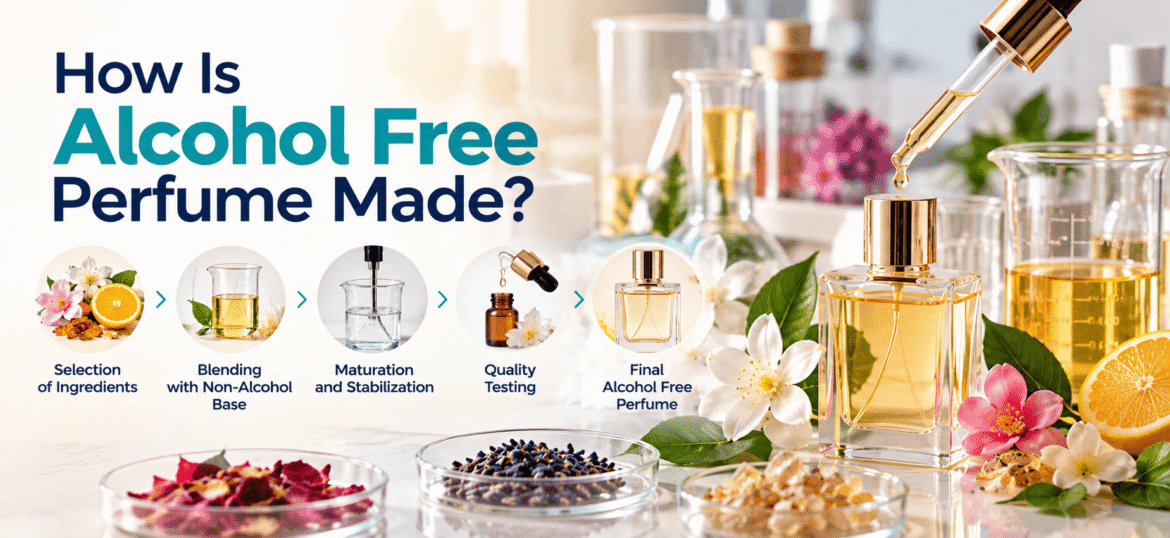
Perfume does not always need alcohol to deliver a pleasant and lasting scent. An alcohol free perfume uses a different formulation approach, replacing traditional alcohol-based carriers with suitable alternatives that can help dissolve and distribute fragrance ingredients. This makes non alcoholic perfume an option for people who specifically want perfume without alcohol or are exploring different fragrance formats. However, creating an alcohol free fragrance is more than simply removing alcohol from a conventional formula. The choice of carrier, fragrance concentration, solubility, stability, and application experience all need to work together. Understanding this process explains how alcohol free perfume formulation is developed and what makes it different from conventional perfume formulation.
What does “alcohol free” actually mean in a perfume?
In perfume, alcohol free usually means the formula does not use ethanol or denatured alcohol as the main carrier for the fragrance. It does not mean that the perfume contains no fragrance oils. The fragrance itself is still made from aromatic ingredients; what changes is the liquid used to carry and deliver those ingredients.
This is the main difference between a traditional alcohol-based perfume and a non alcoholic perfume. Instead of alcohol, an alcohol free fragrance may use another suitable carrier or formulation system. The choice of carrier can affect how the perfume feels, spreads, and develops on the skin.
So, when you see perfume without alcohol, think of it as a difference in the base or carrier, not a fragrance without perfume ingredients. This distinction is important when developing an alcohol free perfume formulation, because the carrier needs to work properly with the fragrance composition.
What is used instead of alcohol in a perfume?
When making an alcohol free perfume, the fragrance needs another way to carry and spread the scent. The choice depends on the type of non alcoholic perfume being made and the texture or application the product needs.
- Oils: Jojoba oil and fractionated coconut oil can be used as carriers in perfume oils. They can give a smooth feel, although the finished product may feel richer on the skin than a traditional spray.
- Water-based systems: Water can be used in some perfume without alcohol formulations, but it usually needs a suitable formulation approach because fragrance oils do not simply mix evenly with water on their own.
- Waxes and solid bases: These are used for solid perfumes. They hold the fragrance in a firm base and allow it to be applied directly to the skin.
So, alcohol free fragrance does not mean removing the fragrance itself. It means choosing a different carrier to deliver the fragrance, while the underlying fine fragrance compositions still determine the character of the scent. The right option depends on the desired texture, application method, and overall perfume formulation.
How do oil-based perfumes work without alcohol?
In an oil-based alcohol free perfume, the fragrance is mixed into a carrier oil instead of ethanol. Oils such as jojoba or fractionated coconut oil can carry the fragrance and make it easier to apply directly to the skin. The fragrance itself does not disappear; the carrier simply replaces the alcohol used in a traditional perfume formulation.
Because the carrier is oil rather than alcohol, alcohol-free attar fragrances can provide a useful example of an oil-based, non alcoholic fragrance experience. It also tends to sit closer to the skin instead of giving the same quick, airy spread associated with alcohol-based sprays. This makes perfume without alcohol a different wearing experience, rather than simply an alcohol-free version of the same spray.
The final feel and scent depend on the fragrance concentration and carrier used, so alcohol free perfume formulation needs to balance both for the desired application and overall fragrance experience.
Can water-based formulas hold fragrance without alcohol?
Yes, but a water-based perfume needs a different formulation approach. Fragrance oils do not naturally mix evenly with water, so a perfume without alcohol usually needs solubilizers or emulsifiers to help distribute the fragrance through the water base. The goal is to create a stable mixture that stays consistent rather than separating into visible layers.
This makes water-based alcohol free perfume formulation different from an oil-based one. Oil-based perfumes use a carrier oil to dilute the fragrance, while water-based formulas need ingredients that help fragrance and water work together. The final feel can also be lighter and less oily on the skin, but the formula may require more attention to stability and compatibility.
For non alcoholic perfumes, the choice between an oil or water base therefore depends on the desired texture, fragrance performance, and formulation requirements.
How Is an Alcohol Free Perfume Formulated Step by Step?
Making an alcohol free perfume is not simply a matter of removing ethanol from a regular perfume. The carrier, fragrance materials, and final texture all need to work together.
- Select the carrier: The formulation starts by choosing a suitable base, such as a carrier oil or a water-based system. This choice affects how the perfume feels and how the fragrance is delivered.
- Add the fragrance compound: The fragrance is then measured and blended into the selected carrier at the intended concentration. This is where the character of the alcohol free fragrance is developed.
- Check solubility and stability: The mixture needs to be checked to make sure the fragrance stays properly distributed and does not separate or become unstable over time. Water-based systems may need solubilizers or emulsifiers for this step.
- Adjust for skin use: Finally, the non alcoholic perfume formulation is reviewed for suitable fragrance levels, skin compatibility, and overall feel before it is considered ready.
This makes perfume formulation a controlled process rather than simply replacing one ingredient, which is why a clear fragrance development brief matters when creating a new product.
Why does alcohol free perfume smell or behave differently on skin?
An alcohol free perfume can feel and smell different on skin because it does not use ethanol as the main carrier. In a traditional perfume, alcohol evaporates quickly and helps carry fragrance into the air, which creates more noticeable projection soon after application.
With a non alcoholic perfume, the fragrance is usually carried in oil or another alcohol-free base. These carriers generally evaporate more slowly, so the scent may stay closer to the skin rather than creating the same immediate throw. The dry-down can also feel slower, and the fragrance may develop more gradually.
This does not automatically mean that a perfume without alcohol will last longer or shorter. Longevity depends on the fragrance materials and the formulation itself. In practical terms, an alcohol free fragrance may suit someone who prefers a softer, more personal scent rather than a strong scent cloud around them.
Does alcohol free perfume last as long as regular perfume?
An alcohol free perfume can last for several hours, but its wear time is not automatically the same as a traditional alcohol-based perfume. Longevity depends on the fragrance concentration, carrier used, and the perfume’s overall formulation. This can make the scent feel softer and change how long it remains noticeable on the skin, depending on the formulation.
A perfume without alcohol may also develop more slowly. Instead of a quick burst of fragrance followed by a gradual dry-down, an oil-based alcohol free fragrance can release its scent more steadily. Water-based formulas can behave differently again, depending on how the fragrance is solubilised and formulated.
So, there is no fixed rule that alcohol-based perfumes always last longer. When comparing products, look beyond the alcohol content and consider the fragrance concentration, carrier system, and complete perfume formulation.
Who is non alcoholic perfume actually made for?
An alcohol free perfume can make sense for people who specifically want a fragrance without ethanol, but the reason for choosing one varies. Some people prefer a non alcoholic perfume because alcohol-containing fragrances may feel drying or uncomfortable on their skin. Others choose perfume without alcohol because of religious or cultural preferences, where avoiding alcohol in personal products is important to them. For some, it is simply a personal preference for an oil-based or closer-to-skin fragrance experience.
The choice can also depend on how the fragrance is used, particularly when developing personal care and beauty fragrances for direct consumer use. Someone looking for a subtle everyday scent may appreciate the softer application of an alcohol free fragrance, while someone accustomed to strong projection may prefer to compare how different formulations perform before switching. In other words, non alcoholic perfumes are not made for one single type of wearer; the useful question is whether the formulation matches your skin, preferences, and expectations.
What should you check before buying or developing an alcohol free perfume?
Before buying or developing an alcohol free perfume, look beyond the “alcohol-free” label. The carrier and fragrance materials determine whether the formula is suitable for its intended use.
- Check ingredient transparency: Confirm which carrier, fragrance materials, and other formulation ingredients are used. A clear ingredient list makes it easier to assess suitability and compare different non alcoholic perfumes.
- Consider the intended use: A carrier formulated for skin application may not be appropriate for fabric, diffusers, or other applications. The perfume formulation should match where and how the product will be used.
- Patch test before regular use: Even a perfume without alcohol can contain fragrance ingredients that may irritate some people. Test a small amount on a suitable area of skin first, especially if you have sensitive skin.
- Check stability: For a developed alcohol free fragrance, confirm that the fragrance and carrier remain properly blended and stable during storage and use, with particular attention to product base compatibility.
- Confirm the formulation goal: If you’re sourcing or developing an alcohol free perfume, discuss the desired scent strength, texture, application method, and intended market before finalising the formula.
This checklist helps separate a genuinely suitable alcohol free perfume formulation from one that is simply marketed as alcohol-free.
Conclusion
Making an alcohol free perfume is more involved than simply leaving alcohol out of the formula. The carrier, fragrance concentration, stability, skin compatibility, and intended use all need to work together to create a reliable product. Whether the formula uses oil, water, or another suitable base, each approach affects how the fragrance feels, develops, and lasts. Understanding these differences makes it easier to choose or develop a non alcoholic perfume that delivers the right fragrance experience without compromising the purpose of the formulation.
FAQs
1. Is alcohol free perfume better for sensitive skin?
An alcohol free perfume may be more suitable for people who find alcohol-based fragrances irritating, but it is not automatically suitable for every sensitive skin type. Skin reactions can also come from individual fragrance ingredients or other components in the formula. If you have sensitive skin, check the ingredient list and patch test the product before regular use. A well-developed non alcoholic perfume should still be formulated with skin use in mind rather than simply removing ethanol from a conventional formula.
2. Does alcohol free perfume stain clothes more than regular perfume?
It can, depending on the carrier used. Oil-based perfume without alcohol may leave a more noticeable mark on some fabrics because oils do not evaporate in the same way as alcohol. Water-based formulas can behave differently, depending on their ingredients and concentration. If you plan to apply an alcohol free fragrance to clothing, it is sensible to test it first on a small, hidden area, particularly with delicate or light-coloured fabrics.
3. Can you make an alcohol free version of any perfume, or only certain formulations?
Not every perfume can simply be converted by removing alcohol. The fragrance materials need to work with the replacement carrier, and the finished formula must remain properly blended, stable, and suitable for its intended use. An alcohol free perfume formulation may therefore require changes to the carrier, fragrance concentration, solubility system, and application method. The original scent can often guide development, but the final non alcoholic perfume may need to be reformulated rather than directly duplicated.
4. What is the best alcohol-free perfume?
There is no single alcohol-free perfume that is best for everyone. Oil-based non alcoholic perfumes may suit people who prefer a closer-to-skin fragrance, while water-based or other formulations can provide a different application experience. The right option depends on the fragrance style, carrier, intended use, and personal preference.
5. How do you formulate an alcohol free perfume?
Perfume formulation starts with selecting the fragrance materials and choosing a suitable base, such as a carrier oil or water-based system. For an alcohol free perfume, the fragrance compound needs to be compatible with the chosen carrier and checked for stability, solubility, skin suitability, and desired performance.