

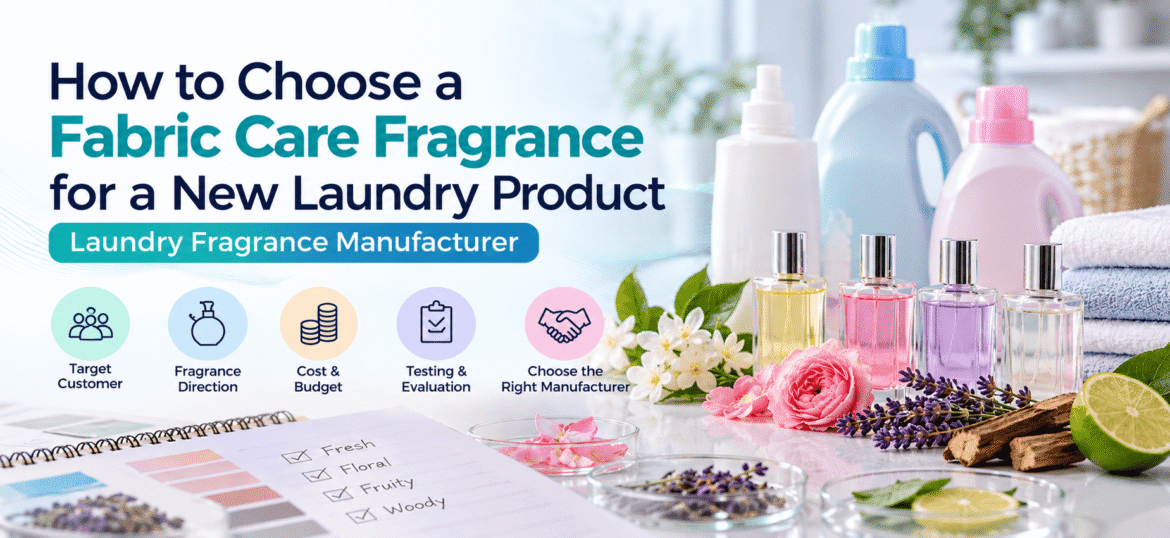
Launching a new laundry product involves more than choosing a fragrance that smells appealing in a sample. The right fabric care fragrance needs to fit the product’s target customer, positioning, price level, and intended scent experience. Whether you are developing a detergent, fabric conditioner, or another fabric-care product, the fragrance should support what the brand wants consumers to notice and remember. Before approaching a laundry fragrance manufacturer or fabric care fragrance manufacturer, it helps to define these decisions clearly. A practical brief can make fragrance selection, sampling, and evaluation more focused, while reducing the risk of costly changes later in development.
Why “best fragrance” depends on your product, not a universal answer
If you are searching for the best fragrance laundry detergent, there is no single scent that will suit every product or customer. A fragrance that works well for a premium laundry brand may not fit a value-focused product, while a fresh, light profile may appeal to a different audience than a rich or floral one. The choice also depends on how the brand wants the product to be positioned and what kind of experience it wants to create after washing. For manufacturers, the goal is not simply to find a fragrance that smells good, but to find one that fits the product, customer, and market. The sections ahead break down these decisions, from fragrance direction and cost to testing and choosing the right manufacturer.
Start with who is actually buying your product
Before choosing a fabric care fragrance, be clear about who will use the finished product. Household segment, region, and price tier can all influence what people expect from a laundry scent. A fragrance that feels fresh and clean to one group may feel too strong, too simple, or not distinctive enough to another.
For example, a mass-market detergent may need a familiar, noticeable scent that supports a sense of everyday freshness without pushing up the product cost. A premium laundry product may have more room for a refined fragrance with a softer or more distinctive character because the scent is part of the overall product experience.
The same thinking applies when choosing a fragrance for washing clothes, including a clothes fragrance liquid designed for a specific laundry product. Instead of asking only which scent smells good, consider who will buy it, what they expect from the product, and what they are willing to pay.
Mass-market vs premium positioning
The product’s price and market position should also guide the fragrance direction. A mass-market laundry product will often need a familiar, noticeable clean scent that works well for everyday use while keeping the fragrance cost within the product’s target range. A premium product may have more room for a distinctive or layered fragrance that gives the product a more refined identity. The choice is not simply about making the fragrance stronger or more complex; it is about matching the scent with what the customer expects at that price point. This also helps determine how much you should invest in the fragrance during development and testing.
Decide on a fragrance direction before you start sampling
Once you know who the product is for, the next step is to narrow down the overall fragrance direction. Instead of asking a perfumer for dozens of unrelated samples, decide whether the product should feel fresh and clean, floral, fruity, or woody and musky.
- Fresh/ozonic: Gives a crisp, airy, and freshly washed impression. This can suit products positioned around everyday cleanliness.
- Floral: Adds a softer, more perfumed character and can work well when fragrance is an important part of the product experience.
- Fruity: Brings a brighter, more noticeable feel and may suit products aimed at consumers who prefer lively scents.
- Woody/musk: Can create a warmer, deeper, and more lasting impression, especially for a more refined positioning.
The goal is not to decide the final fabric care fragrance immediately. It is to give your laundry fragrance manufacturer a clear starting direction. Once the fragrance family is narrowed down, sampling becomes faster and more focused, making it easier to compare options against your product’s price point, audience, and overall brand image.
Make sure the fragrance suits your product’s format
The fragrance direction is only one part of the decision. The same fragrance can behave differently in powder, liquid, or fabric softener, so the product format needs to be considered before you finalise the fragrance. This is especially important when developing a new fabric care fragrance, because the fragrance should fit the product you are actually planning to sell.
You do not need to solve the technical details at this stage. Instead, confirm the format with your fragrance partner early and ask how it may affect the fragrance selection, testing, and final cost. For a detailed explanation of how fragrance behaves across different laundry formats, refer to the existing article on laundry product format differences.
Set a realistic budget before you fall in love with a scent
A fragrance can smell exactly right during sampling and still be unsuitable for the final product if its cost does not match your target market. The budget should be considered alongside the fragrance direction, dosage, and expected selling price. A scent designed for a premium laundry product may allow more room for fragrance cost, while a mass-market detergent usually needs tighter cost control.
Before sampling, set a clear cost-per-unit boundary for the fragrance. This gives your laundry fragrance manufacturer a practical target and helps avoid spending time developing options that will not fit the final formulation. Also consider the intended dosage rather than looking only at the fragrance price per kilogram. A lower-priced fragrance used at a higher dosage may not actually reduce the finished product cost.
Once the budget is clear, you can judge each fabric care fragrance not only by how it smells, but also by whether it makes commercial sense for the product you plan to sell.
Test the fragrance the way your customer will actually experience it
A fragrance should not be approved based only on how it smells on a blotter or during a quick cold sniff. The real test is how the fabric care fragrance performs in the finished product, after washing, and on actual fabric. A scent that seems impressive in the bottle may feel different once it becomes part of the laundry experience.
For a new fragrance for washing clothes, test samples in conditions that are close to normal customer use. This gives you a more useful basis for comparing options and deciding whether the fragrance in detergent matches the product’s intended positioning.
The detailed testing process, including how to compare fragrance before and after washing, is covered in the existing smell-testing article, so there is no need to repeat those steps here.
Check compliance before you finalise your choice
Before approving a fabric care fragrance for production, check the applicable safety, regulatory and usage requirements for the intended product and market. This includes reviewing the relevant IFRA Standards and confirming that the fragrance is suitable for its intended application and planned use level. The exact requirements can depend on how and where the fragranced product will be used and marketed.
A fragrance manufacturer should be able to provide the relevant compliance information and documentation for the fragrance supplied, and clarify any applicable usage limitations. Checking these details early can help reduce the risk of reformulation or delays later in the product development process. For a detailed explanation of IFRA requirements and what manufacturers should check before approval, see our guide to IFRA compliance in fragrance products.
How to choose the right fabric care fragrance manufacturer
Once your consumer, fragrance direction, product format, and budget are clear, the next step is finding a manufacturer that can work within those requirements. For a broader look at how to evaluate a fragrance supplier, see our guide to what separates fragrance suppliers.
- Sampling turnaround: Ask how quickly initial samples and revisions can be provided. Slow iterations can delay product development.
- Batch consistency: A fragrance should remain consistent from one production batch to the next, so ask how consistency is managed during manufacturing.
- Relevant experience: A manufacturer experienced with your type of laundry product can better understand the practical requirements of a fragrance for washing clothes or other fabric-care application.
- Testing support: Check whether the fabric care fragrance manufacturer can support evaluation in the finished product rather than leaving you to manage every test independently.
- Clear communication: You should be able to discuss changes in scent direction, cost, dosage expectations, and production requirements without confusion.
The goal is not simply to find a laundry fragrance manufacturer that can supply a scent. Once your requirements are clear, you can explore fabric care fragrance solutions that fit the intended product format.
FAQs
1. How to choose the right fragrance?
Choose a fragrance based on your target customer, product positioning, preferred fragrance direction, budget, and intended scent experience. For a laundry product, the fragrance should also be tested in the finished formulation to make sure it suits the product before approval.
2. What fragrance is used in detergents?
Detergents can use different fragrance profiles, including fresh, floral, fruity, woody, and musky scents. The right choice depends on the product’s target customer, market positioning, budget, and desired scent experience. The fragrance should also be tested in the finished detergent to ensure it suits the formulation and performs as intended.
3. What is the best fabric fragrance?
There is no single best fabric fragrance for every laundry product. The right choice depends on the product’s target customer, fragrance direction, price range, and intended scent experience. A suitable fabric care fragrance should also perform well in the finished product and match the brand’s positioning.
4. How to add fragrance to laundry detergent?
Fragrance should be incorporated during the detergent formulation process according to the product’s base and formulation requirements. It should then be tested in the finished detergent to check compatibility, stability, and scent performance.
5. What is the best laundry perfume?
There is no single best laundry perfume for every product. The right choice depends on the target customer, fragrance direction, product positioning, budget, and how the fragrance performs in the finished laundry product.
6. Can I use the same fragrance for a detergent and a matching fabric softener?
You can use the same fragrance direction for both products, but the fragrance may need to be adjusted for each formulation. Detergent and fabric softener have different bases and performance requirements, so compatibility and performance should be tested separately in the finished products.