

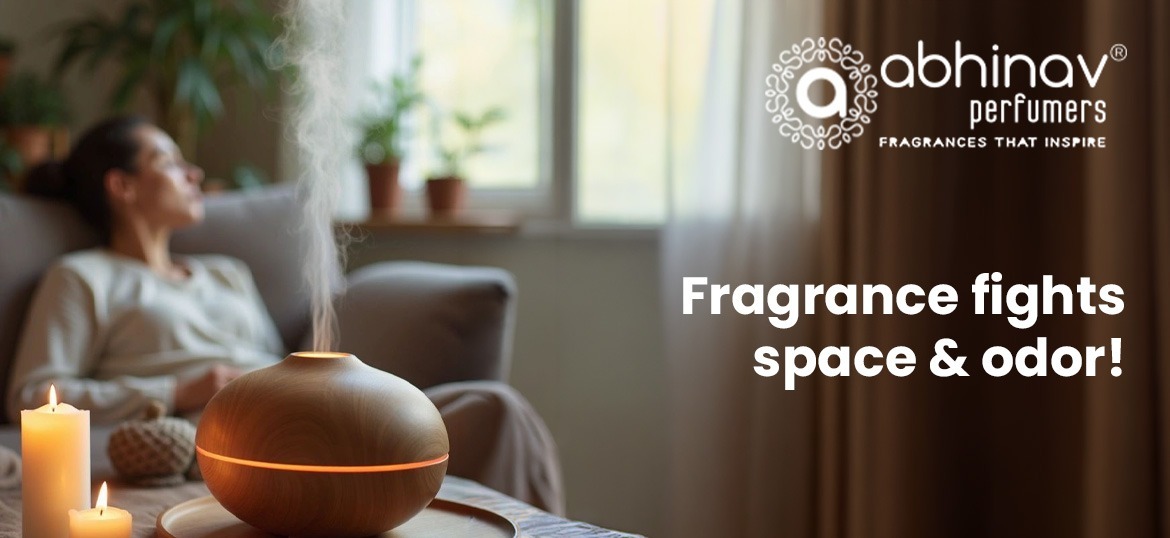
Air care products are often developed with a simple assumption. A room contains unpleasant odours, and the job of the fragrance is to make the space smell fresh again.
In reality, indoor environments are far more complex.
Every room contains dozens of continuously changing odour sources. Cooking aromas, upholstery, footwear, pets, moisture, air conditioning systems, cleaning chemicals, human activity, and outdoor air constantly influence how a fragrance is perceived.
An Air Care Fragrance does not exist in an empty room. It exists in an active environment where countless airborne molecules compete for attention.
Understanding this challenge has become increasingly important for brands developing air fresheners, room sprays, gel fresheners, reed diffusers, car fresheners, and other ambient fragrance products.
For Air Care Fragrance Manufacturers and Industrial Air Care Fragrance Manufacturers, success is no longer defined by creating pleasant fragrances alone. It depends on designing fragrance systems that perform consistently despite continuous environmental interference.
A Room Is Never Truly Odour Free
Consumers often think of rooms as either clean or dirty.
From a fragrance perspective, neither condition exists.
Every indoor environment contains an invisible mixture of airborne compounds originating from multiple sources.
Common odour contributors include:
- cooking oils and spices
- wooden furniture
- upholstery fabrics
- carpets and rugs
- curtains
- footwear
- moisture
- indoor plants
- pets
- cleaning products
- waste bins
- human occupancy
- ventilation systems
Each source releases volatile molecules into the air throughout the day.
An Air Care Fragrance must perform within this constantly changing atmosphere rather than replacing a single unpleasant smell.
Why Odour Competition Is Continuous
Unlike fabric care or personal care products, air care products work in an open environment.
Fragrance molecules disperse freely while new odour molecules continue entering the same space.
For example:
A kitchen may contain:
- fresh coffee
- cooked vegetables
- warm appliances
- cleaning liquids
- wooden cabinets
A living room may include:
- upholstered furniture
- electronic equipment
- fresh flowers
- outdoor air entering through windows
- human activity
Each source continuously influences fragrance perception.
This means the performance of an Air Care Fragrance is dynamic rather than fixed.
Consumers Judge the Entire Environment, Not the Air Freshener
When consumers enter a room, they rarely isolate the fragrance coming from an air freshener.
Instead, they evaluate the complete atmosphere.
They unconsciously ask:
- Does the room feel fresh?
- Does it feel comfortable?
- Does anything smell unpleasant?
- Does the fragrance feel natural?
- Does the environment feel inviting?
This overall sensory impression determines whether consumers believe an air care product is effective.
Even an excellent fragrance can feel ineffective if surrounding odours dominate the environment.
Why Stronger Fragrance Is Not Always the Answer
One common assumption is that increasing fragrance intensity automatically improves performance.
In many cases, the opposite happens.
An excessively strong fragrance may:
- overwhelm the room
- create sensory fatigue
- feel artificial
- clash with existing environmental odours
- reduce consumer comfort
Instead of solving the problem, excessive intensity often creates a second sensory issue.
Modern Air Care Fragrance Manufacturers increasingly focus on fragrance balance rather than fragrance volume.
The objective is harmonious environmental integration rather than simple masking.
Different Rooms Present Different Fragrance Challenges
Every indoor space has its own environmental profile.
Kitchens
Kitchens generate rapidly changing food-related odours throughout the day.
Air care fragrances must coexist with:
- spices
- oils
- steam
- heat
- food preparation
- Bathrooms: Bathrooms require fragrances that communicate cleanliness while performing in humid conditions. Moisture significantly affects fragrance diffusion and perception.
- Living Rooms: Living rooms often contain fabrics, furniture, electronics, and continuous human activity. Fragrance must remain subtle enough for prolonged exposure while maintaining freshness.
- Offices: Office environments introduce additional variables including air conditioning systems, electronics, paper products, and varying occupancy levels.
Industrial Air Care Fragrance Manufacturers develop fragrance systems that account for these unique environmental conditions.
Environmental Conditions Influence Fragrance Performance
Air care fragrance performance depends on much more than fragrance composition.
Environmental factors include:
- room size
- air circulation
- humidity
- temperature
- sunlight
- ventilation
- furniture materials
- occupancy levels
A fragrance that performs beautifully in one environment may behave very differently in another.
This makes environmental testing an essential part of fragrance development.
Why Fragrance Diffusion Matters
Creating an effective Air Care Fragrance is not simply about selecting pleasant fragrance notes.
Equally important is how fragrance moves through space.
An effective diffusion profile should:
- spread evenly
- remain noticeable without becoming overpowering
- maintain consistency over time
- adapt to changing environmental conditions
- support long-term freshness
Poor diffusion often results in fragrance hotspots where the product smells strong nearby but disappears elsewhere in the room.
Modern formulation focuses on achieving balanced environmental coverage.
The Role of Air Care Fragrance Manufacturers
Today’s Air Care Fragrance Manufacturers contribute far beyond fragrance composition.
Their responsibilities include:
- understanding indoor environmental behaviour
- designing application-specific fragrance systems
- optimizing fragrance diffusion
- improving odour compatibility
- ensuring product stability
- supporting long-lasting ambient freshness
This combination of sensory science and formulation expertise helps brands create products that perform in real consumer environments.
Why Industrial Air Care Fragrance Manufacturers Matter
Scaling air care products requires technical precision.
Industrial Air Care Fragrance Manufacturers help brands ensure:
- consistent fragrance quality
- manufacturing stability
- compatibility with multiple delivery formats
- reliable performance across production batches
- compliance with industry standards
Whether the product is a room spray, aerosol, gel, electric diffuser, or reed diffuser, fragrance performance must remain consistent.
Industrial expertise ensures consumers receive the same experience with every purchase.
Air Care Fragrance Must Support Everyday Living
Consumers no longer use air care products only to remove unpleasant odours.
They increasingly use them to:
- create welcoming homes
- improve workplace environments
- enhance relaxation
- support hospitality experiences
- build premium lifestyle spaces
As a result, Air Care Fragrance has become part of environmental design rather than occasional odour control.
Consumers expect fragrances that blend naturally into everyday life while continuously maintaining freshness.
How Abhinav Perfumers Develops Air Care Fragrance Solutions
Abhinav Perfumers develops Air Care Fragrance systems with real-world environments in mind.
Rather than focusing only on pleasant fragrance creation, the development process considers how fragrance behaves in dynamic indoor spaces influenced by multiple competing odour sources.
The approach includes:
- application-specific fragrance development
- optimized fragrance diffusion
- formulation stability
- long-lasting ambient performance
- compatibility across various air care products
- consistent manufacturing quality
By combining technical expertise with an understanding of consumer environments, Abhinav Perfumers helps brands create air care products that perform beyond controlled laboratory conditions.
The Future of Air Care Fragrance
Indoor environments are becoming increasingly sophisticated.
Consumers now expect air care products to complement modern homes rather than simply eliminate unpleasant smells.
Future innovation is likely to focus on:
- intelligent fragrance diffusion systems
- adaptive fragrance technologies
- longer-lasting ambient freshness
- environmentally responsive formulations
- enhanced odour management strategies
- premium lifestyle-oriented fragrance experiences
This evolution will continue expanding the role of Industrial Air Care Fragrance Manufacturers in helping brands deliver consistent performance under diverse environmental conditions.
An indoor environment is never an empty canvas.
Every room contains multiple odour sources that continuously interact with ambient fragrance, making air care performance significantly more complex than simple odour masking.
For brands, this means developing an Air Care Fragrance that performs consistently despite changing environmental conditions, room layouts, and competing airborne molecules.
By partnering with experienced Air Care Fragrance Manufacturers and Industrial Air Care Fragrance Manufacturers such as Abhinav Perfumers, brands can create fragrance systems that maintain freshness, strengthen product performance, and improve the overall sensory experience of indoor spaces.
The success of an air care product is ultimately determined not by the fragrance alone, but by how effectively it performs in the living, breathing environments where consumers actually use it.